
Writing About Not Knowing What to Write about
Doggerland comes from my hat - the place that slipped under water

I publish my monthly Substack soon, and I still have no idea what to write about
Only twice this year, in August and September, was I three days late, and it really bothered me. I never like to be late for my date. It is inked into my DNA; it is like my inner clock. It just ticks: first of the month, click 11:30 a.m., and off it goes. Sunday, Monday, Thursday — whatever day — makes no difference.
Yet this month, I fidget between one idea and another, only to circle back to the first. I usually have no idea what I will write about; it just comes to me, out of the blue, and then I get ready, steady, go. But this month, everything has come to me all at once. So much to say. And I have written nothing.
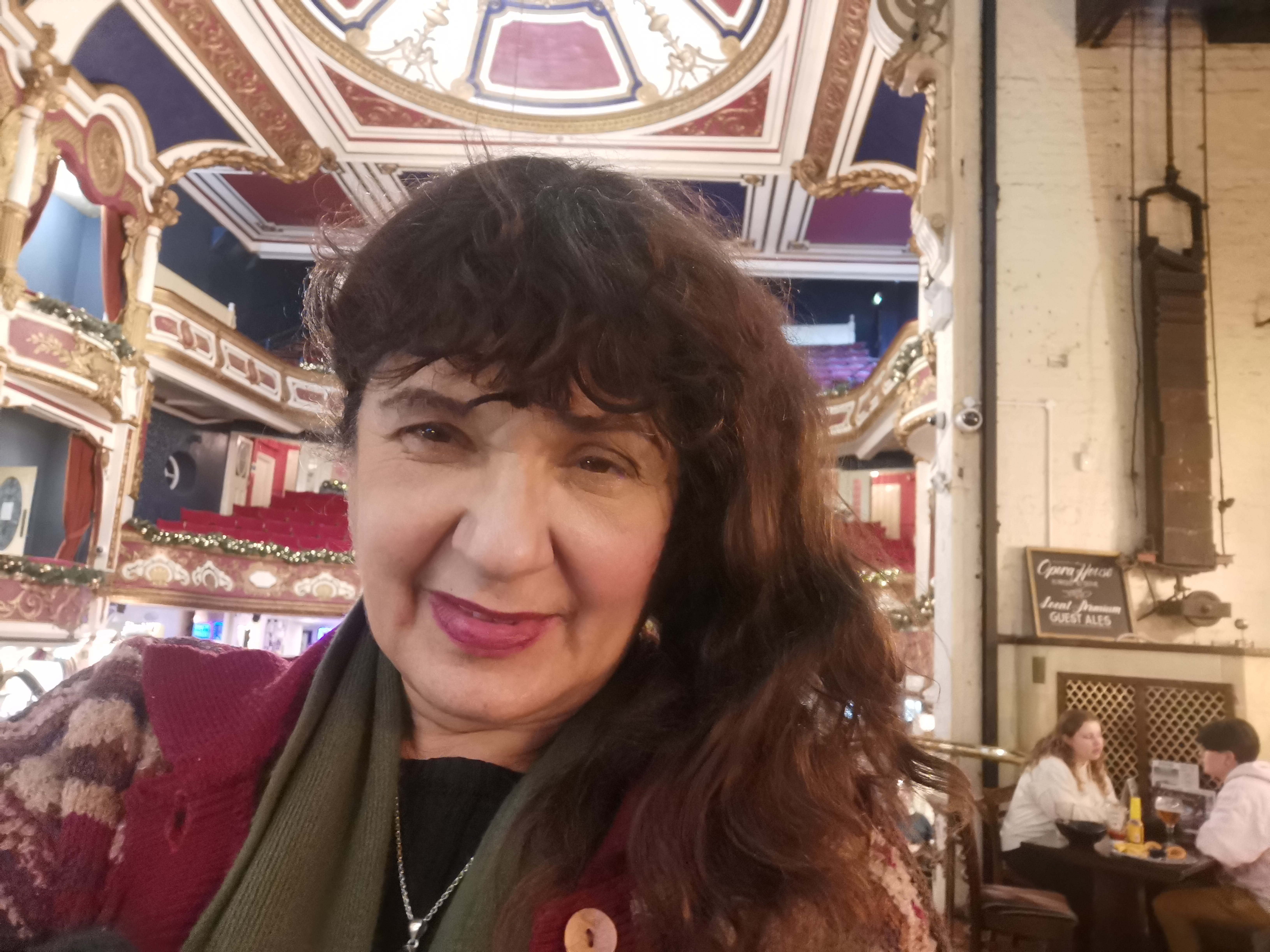
So, I sit in Wetherspoons, the cheap and cheerful diner/bistro called “Spoons,” a British pub chain founded in 1979 by Tim Martin. He chose the name Wetherspoon after his former primary school teacher from his days in New Zealand. He said Mr Wetherspoon was a gentle man, utterly incapable of keeping their rowdy class in line. Martin quipped that he suspected his first pub would be just as unmanageable, which made the name feel perfectly apt!
It is famous because old cinemas, banks, theatres, and historic buildings are renovated and transformed into pubs. Wetherspoons is now one of the biggest pub chains in the UK, with hundreds of branches. The Tunbridge Wells Spoons is an old opera house/bingo hall/cinema/theatre opened in 1902. It is cheap, cheerful, and full of wonderful characters.
This is where I come to think, to write, and to people-watch. My second bureau.
Thursday afternoon
I have just finished work. The budget has been declared, and I have literally just glanced at the papers. I do not have a home; I live with my daughter, and I do not have thousands in the bank, so my way of life will not change.
I had a great class today; the Ukrainian refugees I teach will be able to stay in the UK, for now. They are more important to me than the budget. I feel proud and honoured to be teaching them — there is so much to say…
And yet…
Usually, an idea throws itself into my mind, my heart, my soul, and will not leave me alone. As Werner Herzog says: “My ideas are like uninvited guests. They don’t knock on the door; they climb in through the windows like burglars who show up in the middle of the night and make a racket in the kitchen as they raid the fridge.”
So I find a table at the back, away from the crowds, and scribble some of the ideas on pieces of paper:
My Garden in France — In the Land Where the Cathars Once Lived
Inside Ronnie’s Japanese Garden in Kent
Books I Find on Trains
Doggersland — A Lost Kingdom Beneath the North Sea
Memories of Love and Longing from Montreal, Knee-Deep in Snow
How to Live in a Three-Generation House… and Stay Sane
Camden Road, the Street I Call the River — From the National Front to Pluralism
What Happens to Characters When the Story Ends? (Film, Book, Poem, Play)
So, the only way to find out it is to cut the ideas up, put them in a hat and draw one.
Friday, 28th November. I am going up to London to see the Howardena Pindell expo which I am told is stirring and provoking.
On the way I film myself shuffling the slips of paper. I pick one… and…
I draw out Doggerland!
So Doggerland it is! I am delighted as it is an obession of mine
Amie McGraham, asked me two years ago to continue with this subject. Amie is a wonderful writer and has many tales in her bows…(See her substack above).
Once upon a time, when there wasn’t a time, a piece of land wedged itself between the British Isles and the Continent. It became known as Doggerland.
As the last ice age ended around 20,000 years ago, the earth shifted and raged and crept around itself. The British–Irish and Scandinavian ice sheets begin melting and as the ice retreated around 11,000 years ago a land mass appeared,
Rich rivers flowed across the new plains, and environmental DNA from the submerged sediments now tells us which fish swam there; more bountiful and rich than we can ever imagine: pike, carp, salmon, trout, roach, bream, and eels. It was a paradise.
The first landscape of a new world unfolded
Tundra gave way to grasslands, and grasslands softened into early marshes. A lush, low lying land gave birth to some of the oldest trees known to us: oak, hazel, birch, pine, elm and alder. Shrubs thickened the edges of rivers and wetlands breathed in the wind.
By 10,000–9000 BCE red deer, elk, wild boar thrived and the semi-nomadic Mesolithic hunter-gatherer groups arrived. Families on the move, following the seaons, small in number, interwoven and dependent on each other, moving freely.
There is no evidence from the deep sea research that there were wars as no weapons have been found for killing en masse, only for food.
This was the Middle Stone Age.
The Mesolithic people learnt to live with the land, to roam successfully through vast forests, learning the nature, the animals, cultivating what the seasons brought: berries, wild plants, nuts. Storytelling came to be, as the night fires were the perfect place for oral history; charades with hands, shadows flickering for narratives.
They were a living crossroads of European peoples. Not a single band, not a single culture, but a mosaic of groups, meeting, trading, sharing and surviving together.
They built shelters of wood, hide, and reeds. They ate fish, seals, deer, wild boar, berries, nuts. They travelled by dugout canoe made from hollow tree trunks. Mesolithic groups expressed their creativity through carved bones and stones, engraved tools, small figurines, and delicate jewelry.
Our ancient ancestors spoke a proto-language, the grandparent of all the languages we know today. But back then there was no name for the land they roamed on, it was simply their land to walk freely upon.
The only permanent thing in life is change.
As the climate warmed and changed, as it always has done and always will, between 10,000 and 8000 BCE, the glaciers began to melt across the world. Slowly and steadily, the sea inched forward, year after year, decade after decade, century after century.
Mountains slid. Crops withered. Land swept away. Earth crust shifting, moving, changing, creating and re-creating. Floods became more common in Doggerland, so the groups moved eastwards, northwards, south or west, just as people do today, seeking a safer home. We call them refugees.
Meadows softened into marsh. Rivers grew wide and wild. Tidal flats swallowed hunting grounds. Settlements moved, rebuilt, and then moved again. These refugees of climate disaster went from place to place. As the land grew wetter, lower, more treacherous, Doggerland began to slip beneath the rising waters. Only the highest ridges survived.
The Storegga tsunami, helped the final destruction
About 6,150 BC, a massive underwater landslide happened off the coast of Norway. The landslide displaced enormous amounts of sediment into the ocean, generating a giant tsunami that spread across the North Atlantic. A wall of water, reaching up to twenty metres high, crashed over the last low-lying lands of Doggerland. Research has shown that up to a quarter of the Mesolithic population of Britain lost their lives and swept away what remained of their world.
Around 6200 BC, Doggerland, the now-submerged land connecting Britain to mainland Europe, was partially flooded
When the water receded, a sea remained. Britain had finally parted from the continent; Doggerland was gone, eaten by waves, to keep its secrets for thousands of years. The new sea eventually became known as the Mare Germanicum, by the Romans, the Norðr sjór by the Vikings, and the North Sea/ Noordzee / Nordsee from the middle ages onwards.
The Norðr sjór performed the perfect burial. Layers of mud, sand, silt, and glacial debris settled over the sunken land for thousands of years
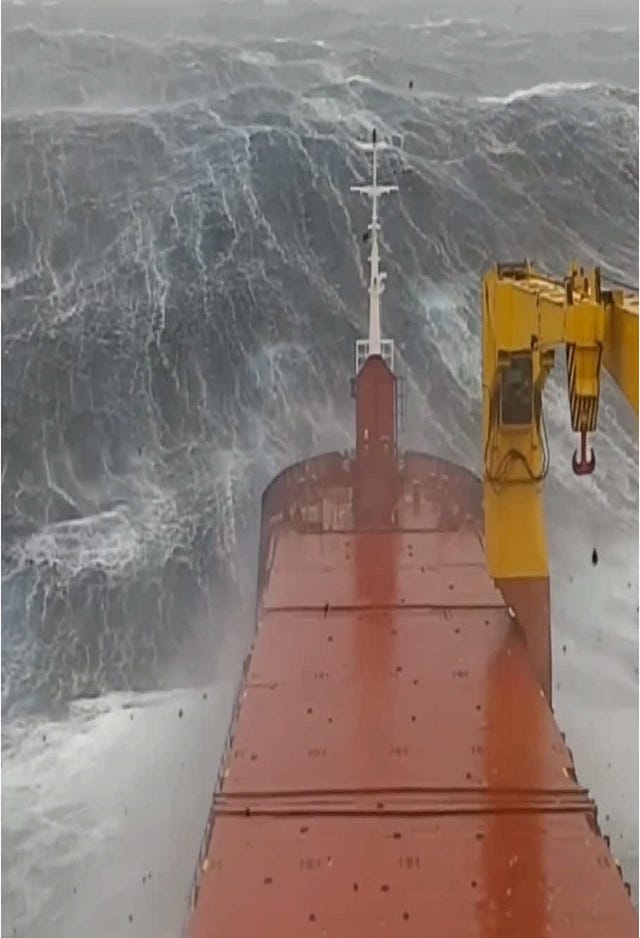
The North Sea is restless, reckless and, deeply scary with massive 100 ft waves. To the south, it flows into the English Channel near the Strait of Dover. To the north, it meets the Norwegian Sea and the wider Atlantic, while eastwards it brushes the coasts of Denmark, Germany, and the Netherlands.
 Tiktok failed to load.
Enable 3rd party cookies or use another browser
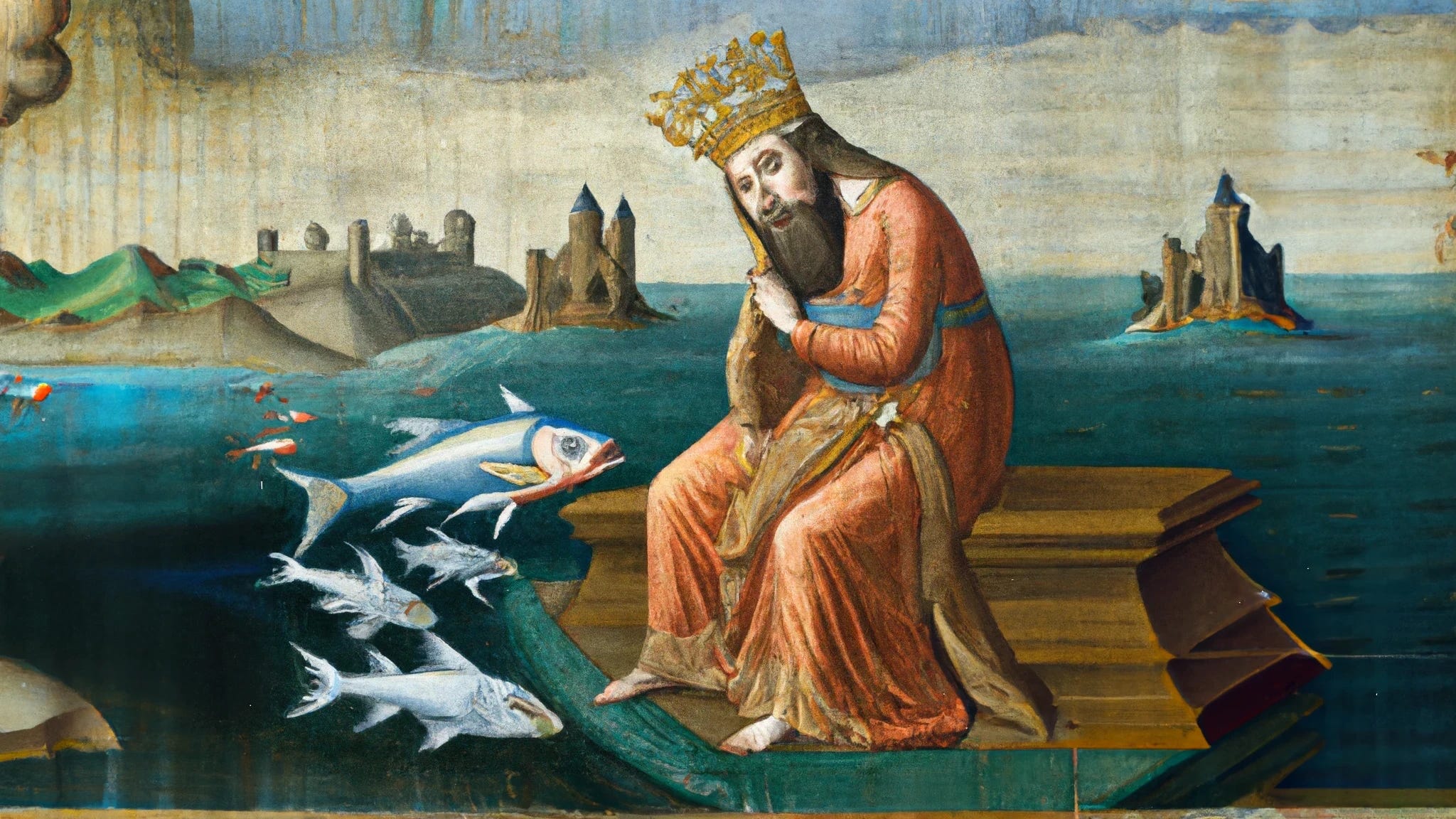
There are so many legends connected to this mad sea. Wars have been fought, pirates born, Rungholt, a mythical city was swallowed by a storm for its people’s sins. There are furious sea creatures like the Kraken and the ghost ship known as the Flying Dutchman. Minke whales dive and seals are the ocean’s kingpins. Sailors have heard the songs of the Selkies, and watched mermaids and mermen dance on the forever horizons. King Cnut sat on his chair and commanded the sea to obey him; it would not.
All these stories and myths been, gone and/or stayed with us, yet we never knew beneath us a whole civilisation once breathed and walked and loved, and then sank, slowly and silently, burying itself in the deep sea soil.
How did we find out about Doggerland
1913: The Discovery
An English geologist,Clement Reid finally identified ancient plant remains and animal bones dredged from the North Sea and beaches. He was the one who proposed that there might have once been a landmass connecting Britain to Europe. He wrote a book, “Submerged Forests“ which is fabulous reading.
For the last 50 years it has been known to geologists that the bed of the North Sea yields numerous bones of large land animals, belonging in great part to extinct species. These were first obtained by oyster-dredgers, and later by trawlers. Fortunately a good collection of them was secured by the British Museum, where it has been carefully studied by William Davies, The bones came from two localities. One of them, close to the Norfolk coast off Happisburgh, yielded mainly teeth of Elephas meridionalis, and its fossils were evidently derived from the Pliocene Cromer Forest bed, which in that neighbourhood is rapidly being destroyed by the sea. This need not now detain us. The other locality is far more extraordinary. In the middle of the North Sea lies the extensive shoal known as the Dogger Bank, about 60 or 70 miles. (Submerged Forests/Chapter 4)
While 1913 marks the publication of Reid’s scientific hypothesis, fishermen had been pulling up these strange and curious finds for decades. These dredged remains were often discarded and tossed back.
1931 — The Breakthrough
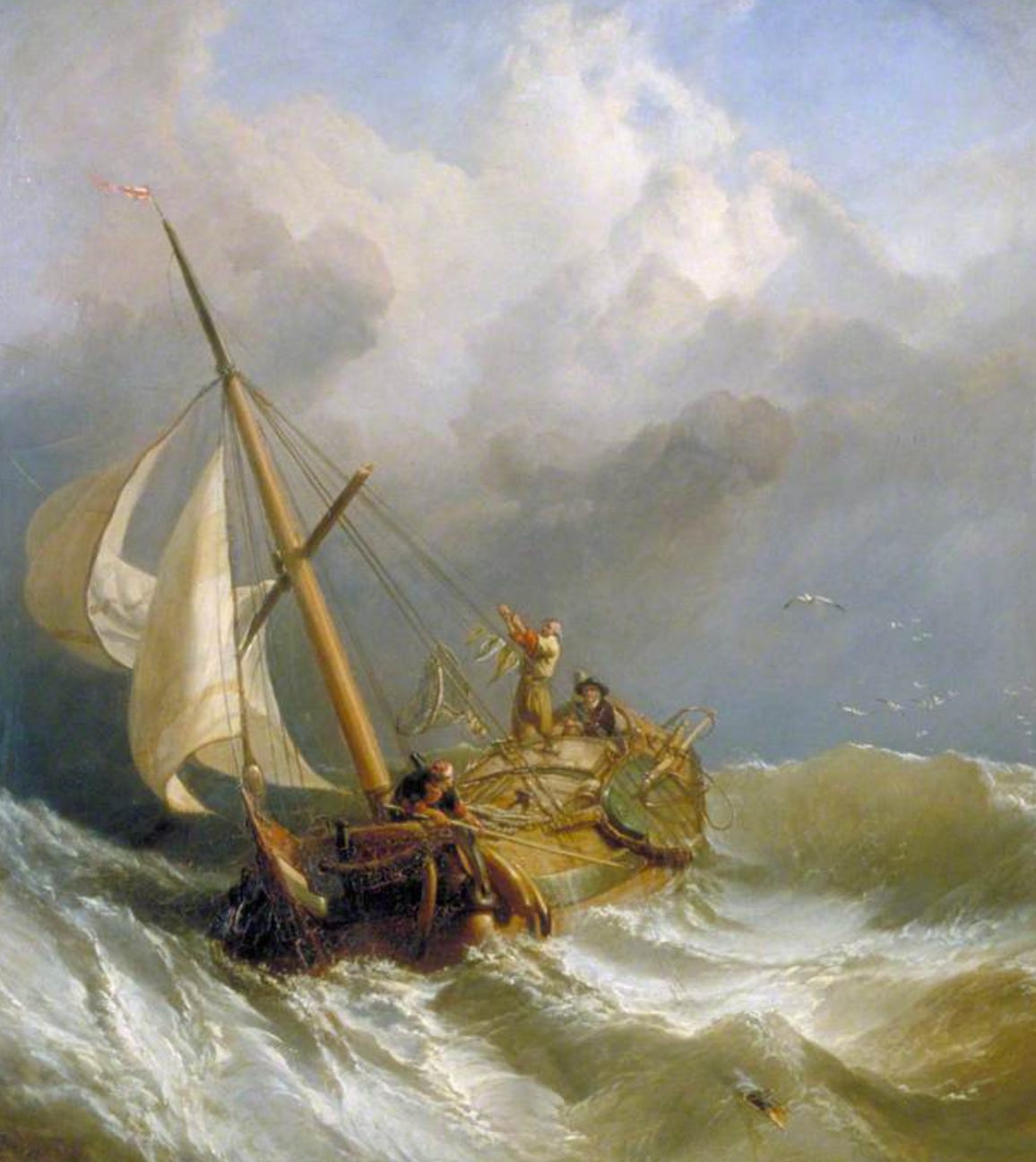
A British fishing vessel Colinda was sailing 25 miles off the Norfolk coast of England near the North Sea’s Leman and Ower large sandbanks, which are known for being hazardous due to their shallow depths and shifting sand features. The fisherman pulled up something from deep in the North Sea. The skipper, Pilgrim Lockwood, broke the peat block with a shovel and discovered a well-preserved, 21 cm (approx. 8 inches) long, barbed harpoon or spearhead made from red deer antler. This was the first real evidence of human activity on a land now lying under water. From “A letter from Doggerland” By Jason Urbanus.
Today’s Research
Modern sonar and seismic surveys have revealed the rivers, hills and coastlines hidden beneath the waves. Shapes of Doggerland, etched like a map, are written in the silt and sand, tracing the land before it disappeared.
DNA from Mesolithic skeletons across Britain, Scandinavia, and northern Europe tells us who the people were: a mix of Western, Eastern, and Scandinavian hunter-gatherers, carrying life and stories across Doggerland and beyond.
By combining artefacts, fossils, sediments, and climate data, deep-sea scientists have been able to reconstruct this lost world of groups, forests, rivers, marshes, people, animals.
We also know how our long ago ancestors lived; the first Europeans, and how they adapted, and ultimately disappeared beneath the sea. Fascinatingly, we can also see where we come from and who we are through taking a deep prehistoric lineage test (maternal or paternal). A mtDNA or Y‑DNA test can take us back tens of thousands of years and show where our very ancient maternal or paternal ancestors came from.
We are truly a bi-racial mix.
Sunday, 30th, 2025
I have almost finished my piece, and I long to feel the sea, to wander and discover. I read that along the coast lies a petrified Mesolithic forest — a residue of our past, visible only when the tide is long and low. I need to go, to touch the pebbles and shingles, to taste the salt air. I live not far from Hastings, Sussex, where the English Channel stretches across to France.
I catch the train, but being Sunday, everything takes longer, and by the time I reach the coast, the tide is in. But, I learn something when chatting with a fisherman who prepares to go out to catch herring. “If you turn left and walk three miles while the sea is low tide to Petts Land, the shingle beach, you will find the remnants of the forest, stumps and the roots of trees spike out of the mud like ghosts. I take my dog there, he loves it.”
I am so excited, so near, just so near. I will come back on Thursday when I have checked the tides, the thought of touching one of our ancestors trees brings real joy; the perfect way to end my story.
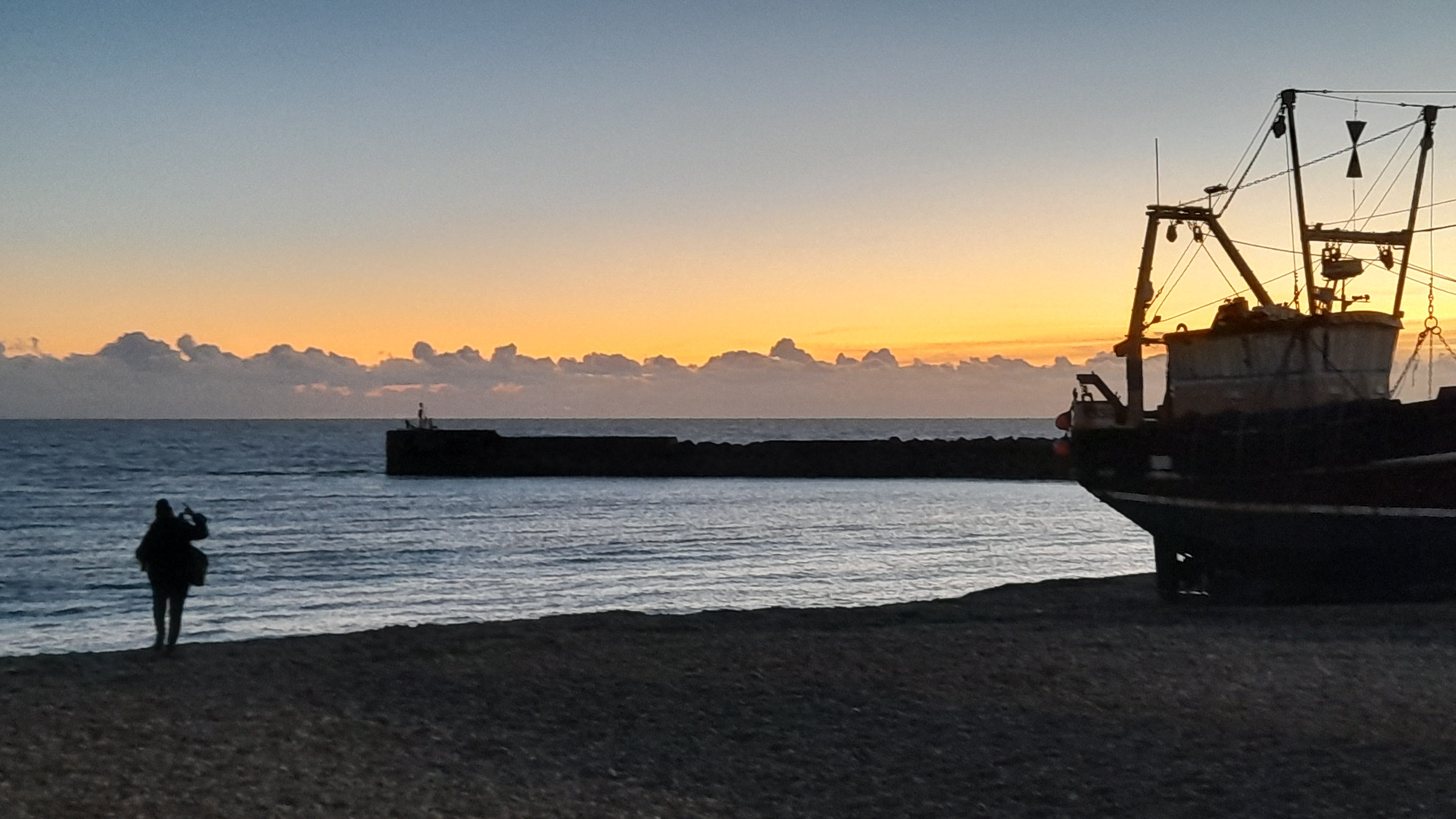
I spend a long time on the shore till the sun comes down and the clouds appear like mountain shapes falling over France.
Thank you so much for reading this rather mammoth piece of writing. I loved working on it. Doggerland has held my fascination for so long; I now understand so much more.
Next time you are on a pebbled beach and find a stone with a complete hole worn through it, you never know, it could be a small jewel from our past.
Have a great, great month ahead. Christmas is coming: a time to make merry, no matter what, just day by day. One day at a time.
If you enjoyed this, please share it, pass it on and I would love a comment from you.
Thank you so much
Jeanne, with love
Very, very interesting. I always knew that Britain was once connected to the Continent, but I assumed - wrongly - that this was where the Channel is now. I did not realise that the actual site is the North Sea.
Very interesting Jeanne; I had never heard of Doggerland. A bit like a second (or third or thousand) Atlantis. I'm sure there are secrets we don't have a clue about in the depths all over the world. And maybe some of them should stay there...but it sure makes me curious! :)